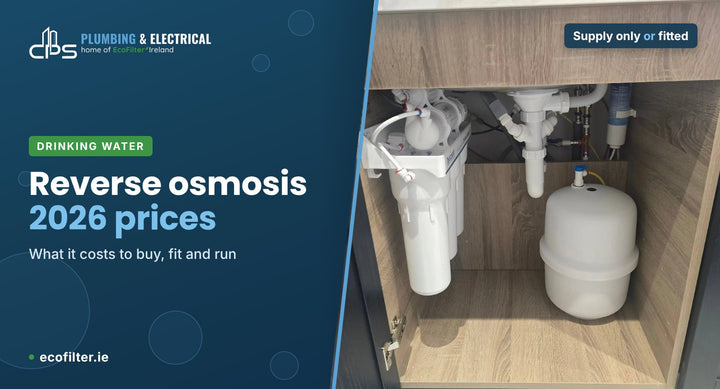
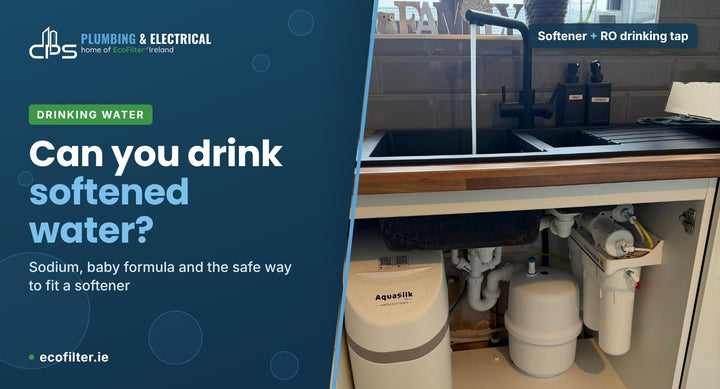
You open the cupboard under the kitchen sink and the cold pipes are dripping wet. Most people blame the water filter or reverse osmosis system. More often than not, nothing under the sink is leaking at all. The pipes are sweating with condensation, because something else in the house is using water non-stop.
Quick answer
- It's usually condensation: cold pipes only sweat when cold water keeps moving through them
- So something is running: most often a toilet cistern passing water into the bowl, then a dripping tap, then the attic tank ball valve not shutting off
- Quick check: use no water for 30 minutes, then feel the cold pipe. Still icy cold means water is moving somewhere
- The fix: sort the leak and the pipes dry up on their own
Watch: how to tell condensation from a leak, and find what's running.
Why cold pipes sweat
Mains water comes in well below room temperature. When it sits still, the pipe slowly warms up to the temperature of the kitchen. When it keeps moving, fresh cold water keeps the pipe cold, and moisture in the warm kitchen air turns to water on it, the same way a cold glass from the fridge fogs up.
In most houses the main cold pipe comes in under the kitchen sink, which is why the stopcock is there. Everything in the house is fed through it, directly or by refilling the attic tank. So a toilet passing water upstairs keeps the pipe under your sink cold and wet.
Condensation or a leak? How to tell
| What you see | Condensation | A leak |
|---|---|---|
| Where the water is | Fine beads along every cold pipe, valve and fitting | Water coming from one joint, valve or connection |
| Hot pipes | Dry | Can be wet, if the leak is on a hot pipe |
| After 30 minutes of no water use | Pipe warms up and starts to dry | Joint stays wet or keeps dripping |
To check a joint, dry it, wrap a piece of tissue around it and leave it a few minutes. A wet patch coming from the joint itself is a leak.
The 30-minute test
Stop using water completely: no taps, flushing, washing machine, dishwasher or showers. If you have a reverse osmosis system, close its small feed valve on the cold pipe too. Wait 30 minutes, then feel the cold pipe under the sink.
- Warmed up: nothing's running. Wipe the pipes dry and keep an eye on them.
- Still icy cold: water is moving somewhere in the house.
The usual suspects, in order
1. A toilet cistern passing water. This is the one we find most. A worn seal on the flush valve or siphon lets a trickle run into the bowl day and night, and you often can't see or hear it. Do the tissue test on every toilet:
- Wait 30 minutes after the last flush
- Dry the back of the bowl, where the water runs down from the rim
- Lay a sheet of toilet paper flat against it
- If the paper is wet within a few minutes, the cistern is leaking. A new seal or flush valve fixes it
2. A dripping tap. Check every one: kitchen, bathroom, bath, shower, utility room and the outside tap. One slow drip is enough to keep the pipe cold. A new washer or cartridge normally sorts it.
3. The attic tank ball valve not shutting off. Many Irish homes have a cold water tank in the attic, topped up by a ball valve. If the valve doesn't shut off, the extra water runs out the overflow pipe, usually through the wall near the eaves. Look for that pipe dripping outside, and if you can get into the attic safely, listen at the tank for a hiss.
Have a water softener too? A toilet passing water also burns through salt. Our softener salt guide shows what normal use looks like.
Don't leave it. Water dripping off sweating pipes can swell the cupboard base over time. Put a tray down while you find the cause.
Could it actually be the filter?
Occasionally. A leak from a filter or reverse osmosis system looks like any other leak: water from one push-fit joint, filter housing or tap connection, not beads all along the pipes. A system like our Ecosoft Standard Pro sits on the same cold pipe, so it gets the blame. If the pipe only warms up with the filter's feed valve closed, the filter is using water, so leave the valve closed and get in touch. Due a service? The yearly RO filter change is €89 as a DIY kit or €150 fitted by us. See our annual service guide.
Common questions
Why are only the cold pipes wet?
Condensation only forms on surfaces colder than the air. Hot pipes are warmer than the room, so they stay dry.
Will the pipes dry up once the leak is fixed?
Yes. Once the water stops moving, the pipe warms up and the sweating stops.
Should I put insulation on the pipes?
Lagging stops the sweating but only hides the problem. Whatever is running is still wasting water, so fix that first.
What if I've checked everything and the pipe is still cold?
There may be a hidden leak under a floor or behind a wall, which needs a plumber to trace. In Dublin and Leinster, get in touch.
Still can't find what's running?
In Dublin and Leinster, our plumbers at CPS Plumbing & Electrical can trace it and fix it. If it is your filter, we service and repair reverse osmosis systems, including other brands. Send us a photo and we'll tell you what we think.
 5-star rated on Google