Swimming pool, bleach, disinfectant: that's how most people describe it. If your tap water tastes or smells of chlorine, you're not imagining it, and you're not alone. Here's why it's there, why it's stronger in some houses than others, when it's actually something else, and the cheapest to the most complete ways of getting rid of it.
Quick answer
Uisce Éireann adds chlorine to public water to kill bacteria on its way through the mains, and a slight taste or smell is normal and not harmful. For a quick fix, keep a covered jug of tap water in the fridge overnight. For a permanent fix at the kitchen tap, a carbon filter or a reverse osmosis drinking water system removes the taste completely. If the taste is suddenly much stronger than usual, ring Uisce Éireann on 1800 278 278.
Why is there chlorine in my tap water?
Almost every public supply in Ireland is disinfected with chlorine. It kills harmful bacteria at the treatment plant, and a small amount is deliberately left in the water so it stays protected as it travels through kilometres of mains to your tap. Without it, water sitting in old pipes and storage tanks would be at real risk of bacteria growing back.
The levels involved are low. Typical chlorine levels at the tap are around 0.5 mg/L or less. The World Health Organization's health-based guideline value is 5 mg/L, ten times higher. You can taste chlorine at levels well below anything harmful, which is why some people notice it and others don't.
Why does my water taste of chlorine more than my friend's?
- You're close to the treatment plant. The supplier has to make sure there's still some chlorine left at the furthest house on the network, so homes near the start of the line get a bit more.
- Treatment changes. Changes in the treatment process can push chlorine levels up slightly for a while.
- Temperature. Chilled water tastes of chlorine less than water at room temperature, which is part of why the fridge trick below works.
- You're more sensitive to it. Plenty of people are, especially if they've moved from a well or a different supply.
Is it chlorine, or something else?
Not every ‘chemical’ taste is chlorine. A quick guide to what you might actually be tasting:
| Taste or smell | Usual cause | What to do |
|---|---|---|
| Bleach or swimming pool | Chlorine from the mains | Normal. Use the fixes below. Ring Uisce Éireann if it's suddenly much stronger |
| Medicinal, TCP or plastic | Usually your own plumbing: chlorine reacting with rubber or plastic in appliance hoses, a new kettle or some tap fittings | Check washing machine and dishwasher connections. A plumber can fit a check valve on the appliance feed |
| Earthy or musty | Natural compounds from algae in lakes and reservoirs, or water sitting in pipes | Run the cold tap for a minute. Usually seasonal and harmless |
| Rotten eggs | Hydrogen sulphide, from a well or from the hot water cylinder | See our guide to the rotten egg smell |
| Metallic | Iron or old pipework | See iron in well water or lead pipes in older homes |
How to get rid of the chlorine taste
From cheapest to most complete:
1. Fridge it overnight
Fill a jug from the cold tap, cover it and leave it in the fridge overnight. This is Uisce Éireann's own tip, and it works because chlorine escapes from water that's left to stand, while cold water also tastes cleaner. Use it within 24 hours and wash the jug regularly.
2. Drink from the right tap
In many Irish houses, especially older ones, only the kitchen cold tap comes straight off the mains. Bathroom taps are often fed from the attic tank, where water can sit for days and pick up off tastes. Drink and cook from the kitchen cold tap only, and run it for a few seconds first thing in the morning.
3. A carbon jug filter
Activated carbon is very good at removing chlorine taste and smell. A jug filter is cheap, but the cartridges need changing every month or so and they only filter what you pour.
4. An under-sink filter or reverse osmosis system
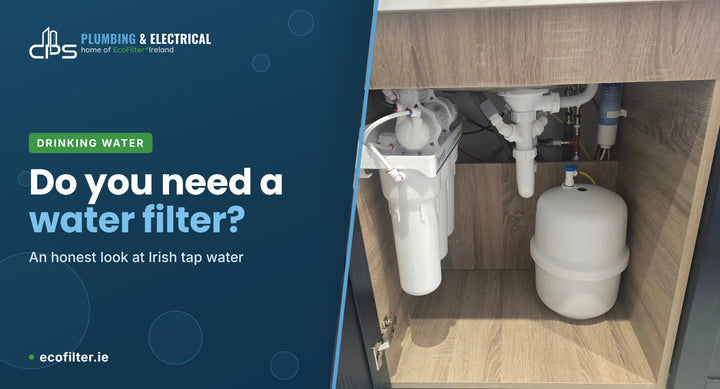
For the kitchen, a filter fitted under the sink is the permanent answer. Every reverse osmosis drinking water system we fit has carbon stages before the membrane, so chlorine taste and smell are gone completely, along with limescale minerals, lead, microplastics and the majority of dissolved solids. You get it from its own tap, or from a 3-way kitchen tap, with no jugs to refill.
Fitted systems start from €399, and the filters are changed once a year: €89 if you do it yourself, or €150 if we do it.
5. Whole-house carbon filtration
If chlorine in the shower or bath bothers you as much as in your glass, a whole-house carbon vessel treats every tap in the house. It's a bigger job and is specified to suit the house, so ask us for a quote.
One thing not to do: don't remove chlorine before water goes into a storage tank. The chlorine is what keeps stored water safe. Filter at the point you drink it, not before the attic tank.
Does boiling get rid of chlorine?
Boiling and then letting water cool will drive off some of the chlorine, and it's why tea and coffee usually taste fine even when the tap water doesn't. It's slow and uses energy, though, and it does nothing for anything else in the water. A filter is the better long-term answer.
Clean-tasting water from your own tap
Our reverse osmosis systems remove chlorine taste and smell completely and are fitted by our own team nationwide except Donegal, Kerry, Leitrim and Sligo. Over 10,000 water filtration systems installed.
 5-star rated on Google
Frequently asked questions
Is chlorine in tap water harmful?
No. Uisce Éireann says a slight chlorine taste or smell is not harmful to health. Typical levels at the tap are around 0.5 mg/L or less, well below the World Health Organization's guideline value of 5 mg/L.
Does a water softener remove chlorine?
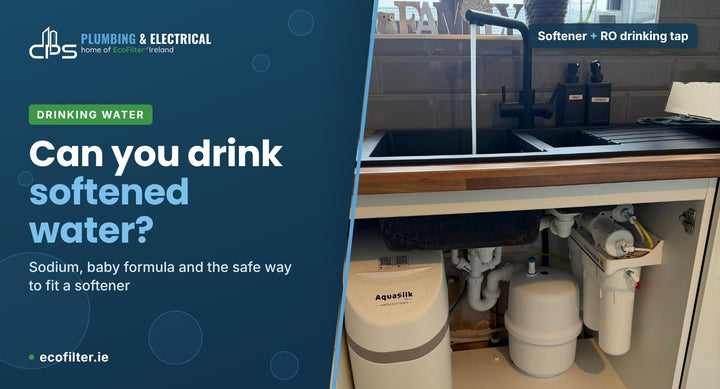
No. A softener only removes hardness. To remove chlorine taste and smell you need activated carbon, which is built into every reverse osmosis system we fit.
Does a reverse osmosis system remove chlorine?
Yes. RO systems have carbon filter stages before the membrane, which remove chlorine completely. The carbon also protects the membrane, because chlorine would damage it.
How often should drinking water filters be changed?
For our reverse osmosis systems, once a year. A filter change costs €89 if you fit the filters yourself, or €150 if we do it. Jug filter cartridges usually need changing about once a month.
Why does my water suddenly taste much stronger of chlorine?
Changes in treatment can raise levels for a while. If the taste is much stronger than usual or doesn't settle, contact Uisce Éireann on 1800 278 278.